Duyurular
Can a simple change in daily routines cut costs, shrink your operation’s carbon footprint, and win more loyal guests? You’ll see how practical steps deliver real gains.
There is enough food in landfills to feed a billion people, and scraps from homes and businesses create roughly double the greenhouse gases of aviation. Those facts make action urgent.
Rising dish costs—sometimes up 150%—and diners who care about sustainability mean you must respond. Leading operators now treat reduction as core strategy, not an afterthought.
This article previews measurement, menu shifts, donation, upcycling, and composting so you can move from data to daily practice. Expect clear steps to quantify how much food and trash you produce, set targets, and track progress.
Business wins follow: lower hauling fees, tighter food cost, better margins, and stronger guest loyalty. You’ll learn models from IKEA and tips sized for single sites and multi-unit groups alike.
Duyurular
Why Reducing Food Waste Matters Now for Your Restaurant
When food cost sits near a third of sales, stopping unnecessary loss is a fast way to protect margins. Food makes up 28%–35% of sales, so small changes can shift your profit line without raising menu prices.
Investing in reduction pays off quickly. For every dollar you put into preventing loss, you can expect roughly $8 back. That covers training, tools, and process updates within a year.
- Tie losses to P&L: protect margins by trimming overproduction and spoilage.
- Win customers: 57% of diners say sustainability influences where they eat, and many prefer locally sourced or environmentally friendly options, per the national restaurant association.
- Help the environment and people: keeping edible product out of landfills cuts greenhouse gases and creates chances to donate meals or compost.
- Build resilience: steady reductions stabilize supply and labor pressures and boost staff morale.
Sonuç olarak: the business case is clear—cutting food loss protects your brand, your team, and your profits this year.
Duyurular
Know Your Baseline: The State of Restaurant Food Waste in the U.S.
Start by measuring the scale of the problem: in 2023 U.S. foodservice recorded 12.7 million tons of surplus food. Treat that figure as your national baseline and compare your operation to it.
Key 2023 figures
Of the 12.7M tons, 79.2% (10.1M tons) went to landfill, 8.8% (1.12M tons) to incineration, and 8.7% (1.11M tons) to composting. These numbers show the current amount food waste distribution clearly.
Where most loss happens
Plate waste drives the problem: 8.85M tons (69.6%). Overproduction adds 1.48M tons (11.7%), and catering overproduction is 1.21M tons (9.5%). Focus first on the biggest drivers to get quick wins.
Customer expectations and brand impact
People expect greener practices, and addressing food loss strengthens your brand. Use simple data—sales, covers, and service style—to estimate your share. Share top-line results with staff and set clear targets so your team can act with purpose.
Start With Measurement: Waste Audits and a Simple Waste Tracker
Start small: seven days of careful sorting produces a yearly snapshot you can act on. Collect clear veri and you’ll see where food and material loss cost you money and time.
Run a week-long audit and extrapolate per year to quantify impact
Perform a seven-day audit by opening bags at close, sorting items into categories like takeout packaging, plastics, paper, produce, and other food. Weigh each stream and multiply by the number of open days to estimate totals per year.
Build a waste tracker that captures weight, source, and notes
Create a simple tracker that records weight, source (prep, line, plate, spoilage), and short notes on root causes like spoilage or breakage. Keep entries short so staff can log quickly.
Use EPA roadmaps and cloud tools to turn data into action
Follow EPA guidance to structure your waste management plan: prevention, recovery, then recycling. Pair manual logs with cloud inventory tools that sync sales, recipes, and stock so you can link food loss to ordering and prep.
- Standardize bins and signage so every shift measures the same.
- Visualize top loss sources weekly to pick the next test.
- Hold daily huddles to review yesterday’s top items and assign fixes.
Use the tracker to set station targets (prep trim, produce spoilage) and revisit monthly. Small, steady steps are how you will reduce food waste and improve management across your operation.
Optimize Inventory, Menu, and Storage to Prevent Food Loss
Smart ordering and tighter storage habits turn daily stock checks into measurable savings. Use past sales to set pars while accounting for holidays and events so you keep key items on hand without overbuying.
Demand forecasting and inventory days on hand
Forecast with historical sales and known events to set pars that match demand. Review inventory days on hand weekly to spot slow movers and adjust ordering.
Low‑waste menu design and surplus specials
Design menu items that share ingredients. That gives you flexibility to convert at‑risk product into weekly specials like soups, sauces, or croutons.
Storage, labeling, and food safety
Apply FIFO with bold date labels and station checks. Keep temp logs and place high‑risk product in the coldest zones to extend shelf life and protect food safety.
- Adopt smart scales and predictive analytics for just‑in‑time cooking.
- Pilot automated systems to reduce trim and portion error.
- Negotiate smaller cases or more frequent deliveries to lower back‑of‑house loss.
Standardize recipes and yield‑aware guides so prep is consistent and portions match your cost targets. Track slow sellers and act fast if inventory days creep up.
Reshape the Guest Experience to Cut Plate Waste
How you present portions and sides has a big impact on what customers finish and what they leave. Small service changes can reduce food loss and protect margins while keeping guests happy.
Right-size portions, flexible sides, and à la carte options
Offer portion choices (standard, light, shareable) so guests pick what fits their appetite. Let customers swap sides or order à la carte to avoid automatic items that often return as leftover.
Train servers with brief scripts that gently guide uncertain diners toward smaller plates or substitutions.
Dynamic pricing and end-of-day markdowns without hurting margins
Use dynamic pricing, markdown alerts, and a late “happy hour” on prepared items to move product while protecting your business margin. Apps that flag near‑expiry meals help you sell instead of discard.
- Test smaller plates, trayless dining, or pay‑by‑weight in buffet and cafeteria settings.
- Promote dishes that use trim or imperfect produce to normalize low‑waste choices.
- Provide attractive, eco‑friendly containers and encourage guests to take leftovers home safely.
Track which meals return most often and adjust portions, sides, or garnishes accordingly. Use end‑of‑service reviews to fine‑tune prep targets for the next shift and keep reducing food loss over time.
From Excess to Impact: Donation, Upcycling, and Composting
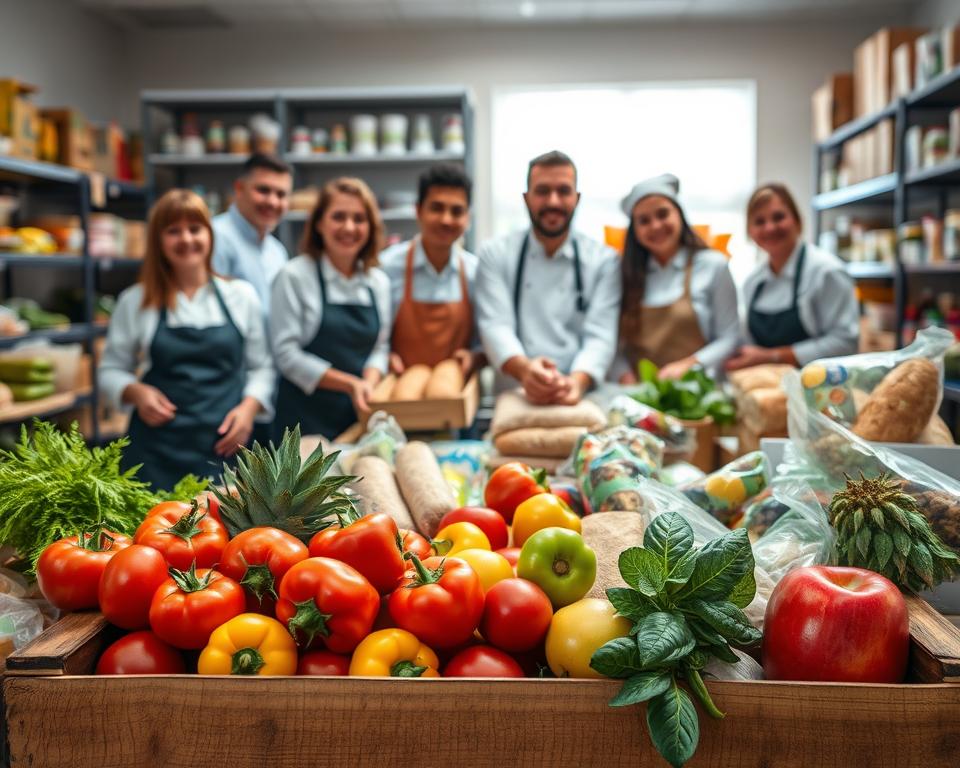
Turn end‑of‑day surplus into community good with simple, safe workflows that protect donors and recipients. Clear steps cut liability concerns and help you move edible product to people, not landfill.
Safe donation workflows and the Good Samaritan Act
The Bill Emerson Good Samaritan Food Donation Act reduces liability for good‑faith donors and offers tax incentives. Build a short SOP that lists eligible items, cooling rules, labeling, and pickup windows so staff know what to save and when.
Apps and partners: Too Good To Go and local networks
Use apps like Too Good To Go to sell end‑of‑day packs; Just Salad’s 2021 pilot saved about 29,000 meals. Pair apps with local food rescue groups for scheduled pickups that match your production cycles.
Composting, vendor partnerships, and training
Explore compost routes—Blackbarn sends scraps to a mushroom facility and gets product back. ReFED recommends partnering with haulers, onsite digestions vendors, and shared cold storage to scale diversion.
- Train staff on the Good Samaritan Act and donation docs to reduce hesitation.
- Turn peels, coffee grounds, and bread ends into syrups, stocks, or partner products.
- Place small bins at stations, use visuals, and coach separation for organics collection.
- Track monthly diversion data and align prep to donation and rescue pick ups.
Share your wins—meals donated, emissions avoided, and upcycling stories help customers and staff see the impact of reducing food loss and improving waste management across your sites.
restaurant waste solutions You Can Implement This Year
This year you can deploy low‑friction changes that protect margins and cut discarded food rapidly.
Appoint people, set small targets, and measure weekly to keep progress visible and steady.
Build a cross-functional culture with training and incentives
Appoint a waste champion and form a compact team—chef, manager, inventory lead, and dishwasher rep—to own your program.
Roll out two or three SOPs at once so habits stick. Start with measurement, FIFO labeling, and portion choices.
Train every role with short playbooks and reward progress with shout-outs, shift meals, or small gift cards.
Leverage ReFED best practices to refine product management
Use ReFED and the Food Waste Reduction Alliance guidance: tighten forecasting, right‑size batches, and improve labeling to extend shelf life.
Launch an inventory management cadence—weekly waste reviews, par adjustments, and a short list of at‑risk items to move via specials.
Quantify ROI: for every $1 invested, realize up to $8 in savings
Track results monthly. For every $1 you invest in reducing food loss, you could see about $8 back in savings.
Monitoring thrown‑away food can cut food cost 2%–6% per year and lower hauling fees and spoilage.
- Set annual targets (for example, 25% lower plate loss; 50% organics diversion).
- Equip stations with labels, scales, clear bins, and prep guides so the right habit is the easy habit.
- Bake goals into manager reviews and share quick wins with guests to amplify brand impact.
Çözüm
You can shrink losses and lift margins by treating reduction as an everyday habit, not a one‑off project.
Remember the scale: restaurants and foodservice generated 12.7M tons of surplus food in 2023, with 79.2% sent to landfill. Tracking what you discard with a simple waste tracker can cut food costs 2%–6% and show quick wins.
Lock in core habits—FIFO, clear labeling, tight inventory days, and right‑sized menu items. Use partnerships and the Bill Emerson Good Samaritan Food Donation Act to move surplus food into meals for people and your community.
Measure monthly, share results with staff and customers, and keep refining inventory management. Small steps this year bend the industry curve, improve your margin, and protect the environment. Learn more about food waste in restaurants here.