Anúncios
Want to read a place through what people eat? This ultimate guide helps you do just that—one bite at a time. You’ll learn how humble vendors make daily life visible: work hours, migration patterns, faith, local ingredients, and neighborhood identity all show up where people gather.
We begin with a clear definition: quick, portable fare meant for immediate eating shapes recipes, portions, and flavor layers. Then the guide traces how dishes moved beyond their homes and across the world.
Along the way, you’ll spot signature dishes like tacos, ramen, falafel, and suya. You’ll get practical tips: what to notice about toppings, cooking methods, queues, and the setting—market stall, cart, or truck.
Whether you’re traveling or exploring your city, this framework helps you connect a meal to its history and experience. For a deeper dive into origins and global spread, see this short primer on the wonderful world of vendors: the wonderful world of street food.
Why street food tells cultural stories you can taste
Tasting a city’s quick meals lets you read its routines, rhythms, and recipes at once. These portable offerings are made for people on the move, so they mirror work schedules, celebrations, and family traditions.
Anúncios
How everyday meals become living cultural heritage
Recipes repeat every day and get passed along informally. A recipe taught at a market stall or cart can last generations.
Vendors keep local flavors alive: a spice blend, salsa, or frying method becomes the defining taste of a neighborhood.
What counts in markets, fairs, parks, carts, and trucks
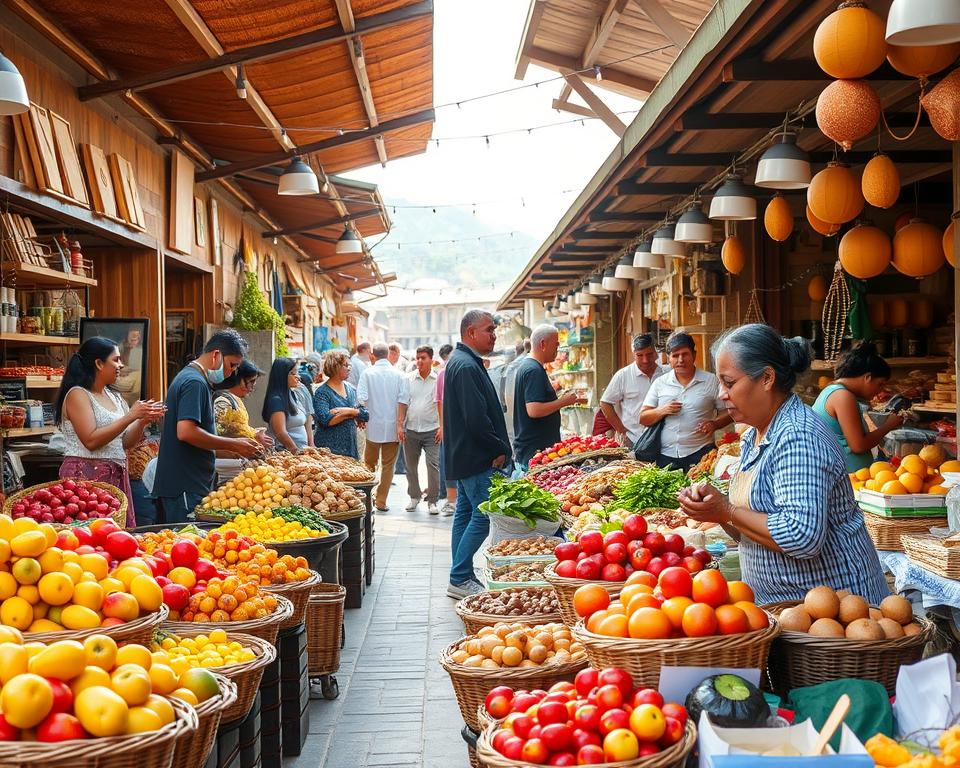
Anything intended for immediate consumption in public can qualify—night market stalls, festival booths, park carts, sidewalk grills, and modern food trucks all fit.
Anúncios
These settings show how meals link to daily life: breakfast bites for commuters, quick lunches for workers, and late-night snacks for night shifts.
- Watch the line: long queues signal local approval.
- Note prep rhythm: fast assembly means recipes designed for speed.
- Check condiments: shared sauces tell you what locals prefer.
- See how people eat: standing, sitting, or walking reveals local manners.
Street food’s global footprint and why it remains so popular today
From morning commutes to late nights, mobile stalls meet routine hunger in dense urban centers. A 2007 FAO estimate shows about 2.5 billion people eat these quick meals every day. That number makes clear this is a daily habit for billions, not a niche trend.
Why prices stay low: vendors run with minimal overhead, fast service, simplified menus, and high turnover. That mix keeps costs down compared with sit-down meals.
For you, the upside is clear: you can sample more variety and build a tasting route without committing to one restaurant. Many middle- and high-income customers also choose value and speed.
Quality and popularity: cheaper doesn’t always mean worse. Many iconic dishes began on carts and grew into national symbols. Vendors act as micro-entrepreneurs, shifting menus for rush hours, festivals, and tourists.
- Convenience fits tight workday rhythms in dense cities.
- High turnover often means fresher batches and steady demand.
- Social media and the food truck boom spread global street food trends while local traditions anchor flavor.
Street food continues because it has always solved urban needs—quick access, affordable meals, and a living link between daily life and taste. For a look at global trends and how vendors adapt, read this primer on the rise of global street offerings: global street food trends.
A quick history of street vendors from ancient cities to modern streets
A quick timeline shows how on-the-go meals became a daily part of urban living across continents. This history explains why portable fare is more than a trend: it’s a working solution cities adopted again and again.
Ancient Mediterranean examples are blunt and useful. In Greece people bought small fried fish. Excavations in Pompeii reveal many stalls and counters. In Rome, poorer residents often relied on chickpea soup with bread and a grain paste when they lacked ovens.
Middle Eastern and Ottoman notes: a 14th‑century traveler described Cairene crowds laying out cloths to eat lamb kebabs, rice, and fritters bought from vendors. By the Renaissance and into 1502, Ottoman authorities regulated sales and set early standards for vendors at crossroads selling spit‑roasted meats.
Global spread and urban growth: in the Americas, portable meals helped feed workers in fast-growing cities like New York City, fueling long workdays and dense commerce. In China, selling snacks goes back to the Tang era, and migration carried those practices across Southeast Asia.
From immigrant stalls to national dishes: ramen began as a Chinese immigrant street offering in Yokohama and became a Japanese favorite. That arc shows how a simple vendor dish can grow into lasting cultural heritage.
Street food culture: what your favorite dish can reveal about a place
A single favorite dish can act like a map, tracing who moved where and what crops shaped local plates.
Migration and fusion: how people on the move reshape local cuisine
When communities arrive, they adapt recipes to available ingredients and tastes. That practical fusion makes recipes changeable and durable.
Watch fillings and spices: they often point to migration routes or trade links.
Ingredients and geography: why regions cook the way they do
Coastal regions favor seafood and quick grilling. Inland areas lean toward slow stews and preserved items.
Ask what is cheap locally—corn, rice, beans, chilies—and you’ll see why a dish looks the way it does.
Markets as community spaces: where food, work, and identity meet
Markets and stalls are social hubs where business, family names, and neighborhood pride meet. Your meal is part purchase and part social exchange.
Listen to accents, notice who cooks, and watch how customers customize orders—those cues reveal the local experience and set up deeper regional looks ahead.
Iconic Asian street foods and the stories behind them
From alleyway grills to nighttime markets, Asia’s portable dishes mirror urban life and history. You’ll find places where quick meals are the default, built for dense neighborhoods and late-night energy.
Thailand’s urban rise
Bangkok’s boom in the 1960s and 1970s turned mobile vendors into daily staples. Rapid urban growth displaced much home cooking, and by the 1970s many locals relied on vendors.
Chinese influences shape many classic recipes. About 76% of urban residents visit vendors regularly, and in 2017 roughly 103,000 sellers generated huge revenue.
Vietnam’s herb-driven balance
Expect lighter, fresh flavors. Herbs, chile, and lime lift dishes like bánh mì-style sandwiches and noodle bowls.
That brightness is part of what makes these bites feel both clean and intense when you order them.
Indonesia’s layered influences
Local, Chinese, and Dutch histories meet in snacks such as nasi goreng, bakso, satay, and gado-gado.
Frying and bold seasoning dominate preparation, and you’ll notice lots of savory fried options alongside tangy salads.
Japan’s ramen journey
Ramen began with Chinese immigrants in Yokohama and started as a convenient meal for workers and students.
It evolved into regional styles and then into a national emblem, showing how an immigrant dish can reshape a nation’s palate.
- Quick tasting tip: try one fried item, one brothy bowl, and one herb-forward snack in each city to get the full variety.
- When you travel: knowing these stories helps you read why a stall cooks a certain way—its ingredients point to history, migration, and appetite.
Latin American street food traditions with Mexico as your roadmap
Mexico’s vendor scene packs an entire restaurant’s menu into a single cart or modest stall. That makes the country a great model for Latin American street food. You can move from handheld tacos to a hearty bowl of soup without stepping into a formal dining room.
Why stalls mirror restaurant cuisine
“Vendors perfect recipes the way restaurants do — but faster.” High daily demand pushes sellers to refine sauces, fillings, and slow-cooked meats until they match sit-down quality.
How regions shape tortillas and toppings
In the north you’ll see more wheat tortillas; elsewhere corn rules. Toppings shift by state: white onion and cilantro are common, while Oaxaca adds guacamole and coastal spots lean to chimichurri-style salsas.
Ordering, seating, money, and tipping
Look for photos and prices; point if needed. Often you pay after you eat. Many stalls have simple seating and feel like neighborhood hangouts in the evening. Cash is preferred; tipping is not required but appreciated.
Signature dishes with quick context
- Tacos al pastor — a fusion of spit-roasted meat with immigrant technique, usually served with pineapple.
- Barbacoa — slow-cooked beef with Aztec-rooted methods.
- Tamales, birria, and pozole — staples that connect daily life to ritual and regional produce.
“Follow the locals—long lines usually mean fresh turnover and better flavor.”
European and Middle Eastern street eats that traveled the world
Across Europe and the Levant, quick bites took simple forms that could move with people and ideas.
Why they spread: portable formats—wraps, folded breads, and fried potatoes—adapt easily when cooks migrate. That adaptability helped these offerings become global favorites.
From pommes frites and crepes to calzones
Paris-style fries likely began as a 1840s street meal. Crepes and calzones share the same logic: a portable, complete meal you can eat on the go.
Falafel, shawarma and döner across borders
Falafel appears across Egypt, Palestine, and Syria as a fried chickpea snack sold by vendors. Spit-roasted meats like shawarma and döner trace to Ottoman and Turkish vendors; migration made döner a German staple.
- Ordering tip: pick your base (wrap, pita, flatbread), add fillings, then choose sauces and pickles.
- Taste checklist: crunch, acid, richness, and heat to compare foods in different cities.
“Spit-roasted preparations stretch back to Renaissance Turkey and even echo ancient grain paste traditions from Rome.”
Africa and Australia: street foods that reflect community, migration, and local taste
On two continents separated by oceans, quick bites reveal how communities share meals and memory.
Africa’s vendor scene centers on markets and communal eating. Try suya, a bold spiced skewer often made with beef or chicken, grilled over open heat for a smoky finish. Injera with stew is tactile and social: the sour flatbread doubles as your utensil and brings vegetables and meat together in a shared plate.
Chapati and beans show everyday practicality. This filling, budget-friendly combo suits commuters and students who need a steady meal on the go.
Australia’s grab-and-go scene
Down under, British roots mix with local produce. Meat pies and fish and chips are classic comfort picks. Barbecue “snags” appear at parks and fundraisers, simple and social.
Don’t skip lamingtons for dessert—sweet handheld nostalgia that proves quick offerings can be iconic.
| Region | Signature item | Typical proteins | Social note |
|---|---|---|---|
| Africa | Suya | Beef, chicken | Market grilling, shared plates |
| Africa | Injera with stew | Beef, vegetables | Tactile, communal eating |
| Australia | Meat pie | Beef | Grab-and-go comfort |
| Australia | Snag (sausage) | Pork or beef | Park barbecues, social events |
“Try one grilled item and one starch-based staple to understand local taste fast.”
Praktyczna wskazówka: pick a grilled plate and a starch dish when you explore. That combo shows spice, texture, and what locals rely on for daily meals.
The role of street food in society, jobs, and local economies
Beyond taste, these offerings act as economic engines that keep money and opportunity flowing locally. You’ll see how quick meals meet daily nutrition and spur micro-economies in neighborhoods.
Why vendors matter for daily nutrition and access
For many people, quick hot meals are the realistic choice. Vendors deliver affordable, ready-to-eat options when time or budget rule out a restaurant.
Opportunity, mobility, and who benefits
Vending creates flexible work that often supports families and funds small business dreams. In some places sellers move from carts to permanent shops.
Gender patterns vary: women dominate selling in Nigeria and Thailand, but appear far less in Bangladesh. That contrast shows how policy and social norms shape access.
Tourism, livelihoods, and public tradeoffs
Visitors chase authentic bites, and your purchases help sustain local recipes as cultural heritage and jobs.
- Vendors buy local produce and circulate cash.
- Tourism boosts revenue but can change menus for visitors.
- Cities must balance livelihoods with congestion and sanitation.
“Choose busy, reputable stalls—your spending supports people and preserves traditions.”
Understanding this human side makes you a more informed, respectful eater today. The rise of these vendors shows how practical meals shape the world we live in.
Health, safety, and regulations you should know before you eat
A clear eye on sanitation and handling helps you pick safer options when you travel. Know the real hazards, the evidence about risk, and how cities manage vendors so you can enjoy the experience with confidence.
What the real risks are
Common hazards include sanitation gaps, unsafe water, poor temperature control, and crowded public spaces that complicate hygiene.
These issues can affect ingredients, vegetables, and cooked items alike, so be alert to visible cleanliness and how food is stored.
What research shows
Multiple studies find contamination at vendors can be comparable to restaurants.
The WHO sampling in Ghana (511 items) reported most microbial counts within accepted limits, showing basic practices work when followed.
How governments act
Effective measures include licensing, inspections, vendor training, mystery shopping, and technical testing.
Examples: the UK Food Standards Agency issued guidance since 2000; India passed the Food Safety and Standards Act in 2006; Singapore built 113 hawker centers (1971–1986) to preserve offerings while improving oversight.
Practical tips to choose safer vendors
- Pick busy stalls with long lines and fast turnover.
- Choose outlets where hot items are kept hot and cooked in front of you.
- Favor vendors with clean surfaces, covered containers, and visible handwashing.
- Be cautious with raw garnishes if water safety is uncertain; rinse or skip raw vegetables early in your trip.
- Start gently with spicy salsas and new ingredients on day one to let your stomach adjust.
“You can enjoy vendor cuisine safely by combining common sense, careful observation, and awareness of local rules.”
| Risk | Dlaczego to ważne | Na co zwrócić uwagę |
|---|---|---|
| Sanitation gaps | Can contaminate ready-to-eat items | Clean surfaces, gloves, handwashing |
| Unsafe water | Affects raw ingredients and rinses | Ask about ice, bottled drinks, or pre-washed produce |
| Temperature control | Bacterial growth in lukewarm food | Hot kept hot, cold kept cold, visible heating |
| Crowded public spaces | Cross-contamination and waste issues | Order where prep is separate from garbage |
Podsumowanie: balance caution with evidence. Many programs make vendors safe, and simple checks let you enjoy local offerings today with confidence.
Wniosek
Small, everyday plates act as shortcuts to a city’s past and present. ,
Podsumowanie: street food gives you fast, honest clues about history, migration, local ingredients, and routines that restaurants often miss.
Use this guide to read setting, toppings, and prep style. That approach helps you decode a dish whether you’re abroad or exploring your own block.
From Asia’s hawker lanes to Mexico’s vendor-to-restaurant links, Europe and the Levant to African and Australian staples, these offerings map a global story of people and taste.
Uwaga praktyczna: choose busy stalls, watch handling and heat, and respect local manners. When you eat, ask what ingredients and techniques you’re tasting—and what story you take home.