Iklan
Can one small change on your plate truly help heal the planet? That question drives the choices you make each day. Your diet links to the environmental impact of global food systems, and tiny shifts can lower emissions and ease pressure on land and water.
You’ll see how plant-forward meals and smarter sourcing help reduce waste and support food security. Simple habits—buying seasonal produce, planning meals, and choosing upcycled foods—cut trash and save money.
Precision and regenerative production improve soil, boost biodiversity, and lock in carbon. Cultivated meat and edible packaging are real innovations that make tasty foods with lower impacts.
By the end of this guide, you’ll have practical, doable steps to help reduce emissions, support farmers, and leave a healthier planet for future generations.
Why eating sustainably matters right now in the United States
What you eat in the U.S. has ripple effects on air, water, and land from farm to fork.
Iklan
One-third of all produced food is never eaten. That lost crop and meal equals roughly 8% of global greenhouse gas emissions and adds pressure on landfills and waterways.
Meat and dairy production drive a large share of those impacts. They demand more land and water and raise greenhouse gas levels during production and transport.
Precision tools and regenerative methods help. Sensors, drones, and targeted inputs cut runoff and waste. Cover crops and rotational grazing rebuild soil, capture carbon, and lower erosion.
Iklan
- You’ll see how high per-capita consumption and waste raise greenhouse gas emissions.
- Hyper-local sourcing trims transport, supports regional growers, and bolsters food security.
- Smarter shopping and small shifts at home can reduce environmental harm across the country.
“Small changes at scale make measurable differences for the planet.”
By acting now you help reduce environmental impact and strengthen regional resilience for years to come.
Sustainable food practices you can start today
Choosing more plants and whole grains sharply lowers environmental strain while keeping meals tasty. Start small: swap one animal-product meal a day and replace ultra-processed items with whole ingredients. These shifts cut waste, save money, and improve your nutrient intake.
Shift your plate toward plants to lower emissions and boost health
Fill half your plate with vegetables, fruits, and legumes. That gives fiber and key nutrients while cutting reliance on meat and dairy. Fine-dining kitchens like Geranium show plant-forward menus can be both creative and satisfying.
Cut back on meat and dairy to shrink your environmental impact
Right-size portions of meat and pick beans, tofu, or lentils several nights each week. Even modest reductions in livestock consumption help reduce land and water pressure and lower emissions.
Swap processed foods for whole, minimally processed ingredients
Choose whole grains—quinoa, buckwheat, wild rice, unrefined barley, or wheat berries—instead of refined products. Upcycled items, such as crackers made from spent grain, add value and help reduce waste.
- You’ll ease into eat sustainably habits by making simple grain bowls with seasonal produce.
- You’ll cut processed foods and boost nutrients with whole-ingredient swaps.
- You’ll shop regional when possible and watch for high-transport or heated-greenhouse items.
“Small, steady changes to what you buy and cook add up to big benefits.”
Smart ways to reduce food waste at home
Small changes to how you shop and store groceries keep more of what you buy on your plate.
Plan, store, and portion to keep foods fresh and out of landfills.
Plan meals before shopping so you buy only what you will use. That helps you save money and conserve resources like water and energy embedded in groceries.
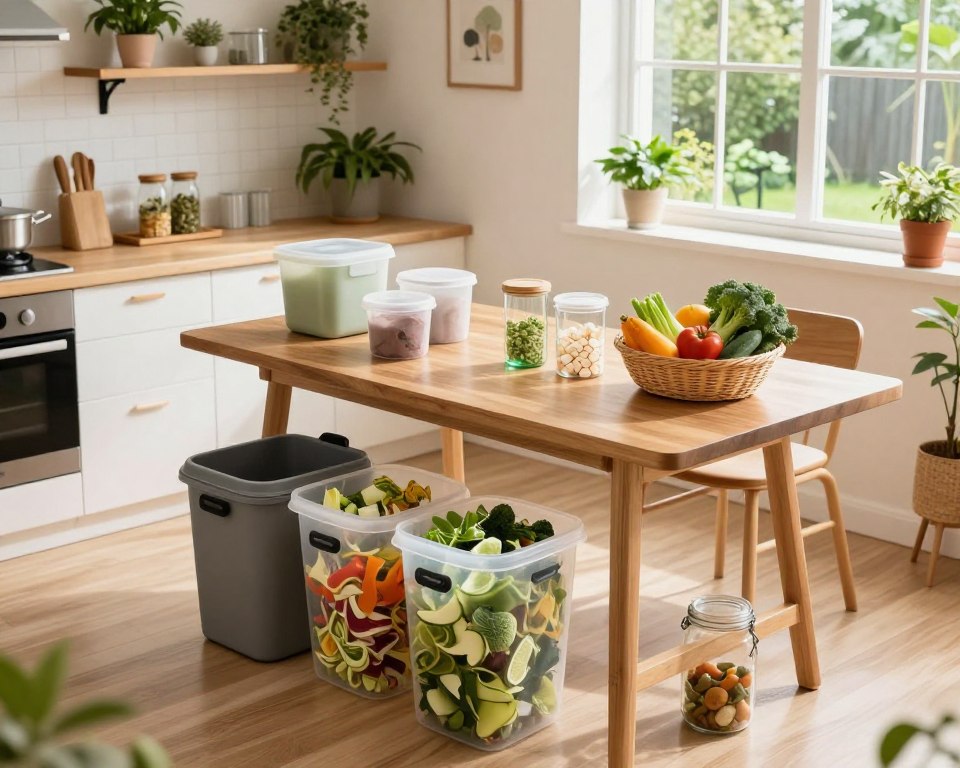
Store items smartly: keep leafy greens dry, freeze bread, and use clear bins so your fridge becomes a first-in, first-out system.
Portion and prep on shopping day by chopping produce and cooking a base of grains or beans. This makes weeknight meals easier and less likely to be forgotten.

Upcycle leftovers and ingredients to make the most of what you buy
Adopt a use‑it‑first bin and a weekly clean‑out meal—frittatas, fried rice, or soup—to transform odds and ends into satisfying dishes.
Blend soft berries into smoothies, simmer veggie scraps into stock, or try store-bought upcycled products made from spent grain. These products add value while avoiding landfill.
- Lean on your freezer as a pause button for leftovers and batch staples.
- Decode date labels and trust your senses to avoid tossing perfectly good food.
- Choose larger formats for staples when practical to cut packaging and processed foods waste.
“One-third of global food ends up uneaten, driving roughly 8% of human-caused emissions.”
Source with purpose: local, seasonal, and responsible choices
When you source produce nearby, you cut travel, support neighbors, and eat at peak ripeness.
Support nearby growers and eat by the season
Buy local to lower transport-related greenhouse gas emissions and to enjoy fresher, better-priced items. Visit farmer markets, join a CSA, or learn about nearby urban gardens to help regional production and resilient communities.
Pick better seafood and smart bulk buys
Choose sustainable seafood caught by pole-and-line or well-managed fisheries to protect species and marine ecosystems. Buy staples in bulk with reusable containers to cut packaging and extra trips, which helps reduce environmental impact.
- You’ll favor regional, in-season produce to lower gas emissions and taste the peak harvest.
- You’ll add ancient grains like sorghum and millet to diversify your pantry and support varied farming practices.
- You’ll keep meat portions smaller and seek plant-forward dishes that highlight local production.
Support local growers and scan labels for brands that disclose sourcing, worker care, and environmental standards.
“Small sourcing choices add up to a measurable impact on the planet.”
Beyond your kitchen: farming and food innovations shaping a healthier planet
From soil to shelf, new approaches are cutting waste and building resilience across supply chains.
Regenerative methods that rebuild soil and biodiversity
No‑till planting, cover crops, and rotational grazing restore soil structure and lock carbon into fields. These steps help farms resist droughts and floods while supporting more species in the landscape.
Precision tools that save water and nutrients
Sensors, drones, and AI tailor inputs so growers use fewer resources and curb runoff. That lowers input costs and reduces the chance of harmful runoff reaching waterways.
Cell-grown meat, upcycling, and edible packaging
Cultivated meat—pioneered by firms like Upside Foods—offers protein with fewer impacts than conventional livestock production.
Upcycled ingredients and seaweed-based wrappers from brands such as Upcycled Foods and Notpla keep more value in products and cut plastic waste.
- You’ll see how these farming practices and tech reduce greenhouse gas emissions and boost resilience.
- You’ll learn how your purchases can reward lower-impact production and protect species and ecosystems.
- You’ll grasp that policy and investment speed adoption and help scale cleaner solutions.
“Innovation plus consumer demand can move entire sectors toward cleaner emissions profiles and healthier landscapes.”
Build a sustainable diet you’ll actually enjoy in 2025
Build a weekly rhythm of meals you love so changing what you eat feels simple and fun.
Focus on whole grains and versatile ingredients like buckwheat, quinoa, and wild rice. These give dense nutrients and work in quick bowls, soups, and tacos so you can skip ultra-processed options.
Keep your pantry stocked with staples and easy add-ins—beans, miso, toasted nuts, and dried mushrooms—to boost umami and reduce reliance on animal products while keeping meals satisfying.
Practice portion-aware cooking and batch leftovers so lunches are simple and you steadily reduce waste. Tweak familiar recipes instead of overhauling your whole routine.
- You’ll build a weekly meal rhythm you love—lentil tacos, seasonal grain bowls, and hearty soups.
- You’ll plan takeout and restaurant choices with a plant-forward eye, making it easy to support health and the planet.
- You’ll try one or two simple tracking ways—meat-free Mondays or a “use-it-first” container—to keep progress gentle and steady.
“Small, tasty swaps and a stocked pantry are the easiest ways to eat sustainably without losing flavor.”
Kesimpulan
Small household habits quickly add up to big cuts in waste and greenhouse gas emissions.
strong, Plan, store, and upcycle what you buy to lower how much food produced ends up lost. That one-third figure matters: less waste cuts roughly 8% of global greenhouse emissions tied to the food chain.
Choose seasonal, local products and try one or two simple swaps this week. Support regenerative and precision approaches when you can and look for upcycled or cultivated options as they appear.
These steps help reduce environmental impact now and leave a healthier planet for future generations.