Oglasi
You’ll notice a real change in mood and energy when you steady your blood sugar and feed the gut-brain link. Small swaps in what you eat today can cut mid-morning slumps and help you stay alert all afternoon.
Most adults in the United States fall short of the recommended amount — about 25–35 grams a day — and many average roughly 15 grams. That gap affects how your body uses sugars and how full you feel between meals.
This section shows practical steps, not theory. You’ll get clear examples of fruits, vegetables, whole grains, beans, and nuts that fit into familiar meals. We’ll also explain how steady intake lowers disease risk and supports long-term health.
For more on the gut-brain connection and why this matters now, see this short guide from Texas Health: Gut Feeling: Why Fiber Should Be Your Wellness.
How Fiber Fuels Your Mood and Energy Right Now
Eating with the gut-brain loop in mind can give you more even energy and a brighter mood fast. Small changes at meals change how your digestive tract and brain talk to each other.
Oglasi
From gut to brain: short-chain fatty acids and your “feel-good” loop
When you eat certain carbs, beneficial gut microbes ferment them into short-chain fatty acids (SCFAs). These SCFAs send signals along the gut-brain axis that can support a steadier, more positive mood.
Steadier energy: slowing glucose absorption
Soluble, gel-forming fibers slow gastric emptying and how quickly sugar enters the blood. That smoothing of blood sugar spikes helps you avoid post-meal crashes and keeps focus consistent.
Fuller for longer: appetite and regularity
Bulky foods add volume, slow digestion, and help you feel satisfied between meals. Insoluble types help stool form and regular bowel movements, which can make your daily energy feel less sluggish.
Oglasi
- Savjet: If you increase intake, sip water during the day—fiber pulls water into the GI tract.
- Bilješka: Added ingredients like inulin or chicory root may cause gas for some people; scale back if you notice discomfort.
Fiber Types That Make the Biggest Difference
Knowing which kinds act as gels, prebiotics, or bulk agents helps you pick foods that steady blood sugar and ease digestion.
Soluble and viscous forms
Soluble and water: viscous gels that balance glucose and cholesterol
Soluble fiber dissolves in water and forms a gel. This slows digestion so glucose rises more gently after a meal.
Beta-glucans from oats and barley are especially good at helping cholesterol and post-meal glucose. Other sources include oats, chia, beans, apples, and berries.
Bulking types for regularity
Insoluble: adding bulk to stool to support regular bowel movements
Insoluble forms don’t dissolve. They add weight and volume to stool and help keep you regular.
Find them in whole wheat, quinoa, brown rice, leafy greens, and many fruits with edible skins.
Fermentable vs. nonfermentable
Feeding your microbiome vs. adding structure
Fermentable options like inulin, pectins, beta-glucans, and resistant starch feed gut microbes and act as prebiotics.
Nonfermentable types such as psyllium or cellulose travel mostly intact to the colon and help form bulk stool.
- Whole-food mix: build plates with oats, beans, fruits, vegetables, whole grains, nuts, seeds.
- Variety matters: different types drive different effects and lower long-term disease risk.
Fiber Nutrition Benefits for Heart, Metabolic, and Digestive Health
Adjusting meals toward plant-forward choices helps manage cholesterol, blood sugar, and bowel regularity.
Heart health: lower LDL and reduced risk of heart disease
Viscous, soluble forms trap bile and some cholesterol in the gut so your body excretes more of it. This natural route helps lower LDL and supports heart markers you can track.
Glycemic control: steadier blood sugar and lower diabetes risk
Slowing carbohydrate absorption smooths rises in blood after meals. Over time, that pattern can lower your risk of type 2 diabetes and help keep blood levels more even.
GI regularity: prevent constipation and support the digestive tract
Enough daily intake softens stool and speeds transit. That reduces constipation and makes routine more comfortable.
Cancer considerations and broader disease risk
High intake patterns link to lower colorectal cancer risk, likely through microbiome and anti-inflammatory pathways.
- Clinical evidence: beta-glucan from oats lowers LDL.
- Patterns matter: whole grains, legumes, and produce lower long-term disease risk.
- Old myths debunked: nuts and popcorn don’t raise diverticulitis risk and may help.
How Much You Need Each Day (and How to Ramp Up Safely)
Knowing the right daily goal helps you raise intake without discomfort or added risk. Use age and calories to set a clear target so changes are steady and sustainable.
Daily targets: The National Academy of Medicine gives clear numbers: women 50 and younger need about 25 grams per day; women 51 and older need 21 grams. Men 50 and younger should aim for 38 grams, and men 51+ for 30 grams. As an alternative, try 14 grams per 1,000 calories.
Ramp-up tips to avoid discomfort
If you now get ~15 grams, increase slowly. Add a few grams each week so your gut adapts.
“Small, steady changes reduce gas, bloating, and cramping while you adjust.”
- Match water with every rise: extra fluid helps move bulk through the gut.
- Watch added fibers: bars or shakes high in inulin or chicory root can cause gas; cut back if you feel gassy.
- Use measured supplements sparingly: psyllium or methylcellulose can top up grams but don’t replace whole foods.
- Mind sugar and refined carbs: lowering them while you increase intake smooths energy and supports overall health.
- Pick a grams goal based on age and sex (25–38 grams for most adults).
- Increase slowly over 7–14 days and drink more water.
- Track energy, digestion, and hunger to gauge if the amount is right.
For a practical list of foods to reach your target, see this high-fiber foods guide.
High-Fiber Foods You’ll Actually Eat
Small, tasty swaps at the grocery store can add meaningful grams to your daily total. Start with foods you already like and rotate them across meals. That keeps variety high and planning low.
Whole grains to prioritize
Build plates around whole grains that fit your taste.
- Oatmeal: contains beta-glucan and helps lower LDL; ~5 g per cooked cup.
- Quinoa: ~5 g per cup cooked.
- Brown rice & whole wheat pasta: about 3.5–6 g per cup cooked depending on the product.
- Wheat bran: ~5.5 g per ¾ cup for topping or baking.
Fruits and vegetables that pull their weight
Pick fruits with skin and hearty vegetables for real grams without added sugar spikes.
- Apple with skin ~4.5 g (medium); raspberries ~8 g per cup.
- Artichoke ~7 g each; boiled broccoli ~5 g per cup; winter squash ~6.5 g per cup.
Legumes, nuts, and seeds
Legumes are the easiest way to add much fiber in one serving.
- Beans ~15 g per cup; chickpeas ~24.4 g per cup.
- Almonds ~3.5 g per ounce; pistachios ~3 g per ounce.
- Chia or ground flax: stir into yogurt or oatmeal for a soluble fiber boost.
Reading labels
Watch total dietary fiber, not just a big number on the front. Check the ingredient list for added fibers like inulin or chicory root.
“If a bar lists 10+ grams of added fiber and leaves you uncomfortable, swap it for oats and berries or a bean-based lunch.”
- Savjet: favor whole-food sources for steady blood sugar and heart health.
- Bilješka: added fibers can cause gas in some people—reduce if needed.
- Practical: aim to mix grains, fruits, vegetables, and legumes across the week.
Build Fiber-Rich Meals to Boost Daily Energy
A few practical swaps at breakfast, lunch, and snack time will raise your daily grams without extra fuss.
Breakfast ideas
Start with oatmeal and berries or choose a whole-grain cereal that lists a whole grain first and gives ≥20% Daily Value for fiber per serving.
These picks add early grams and help steady your morning energy.
Lunch and dinner swaps
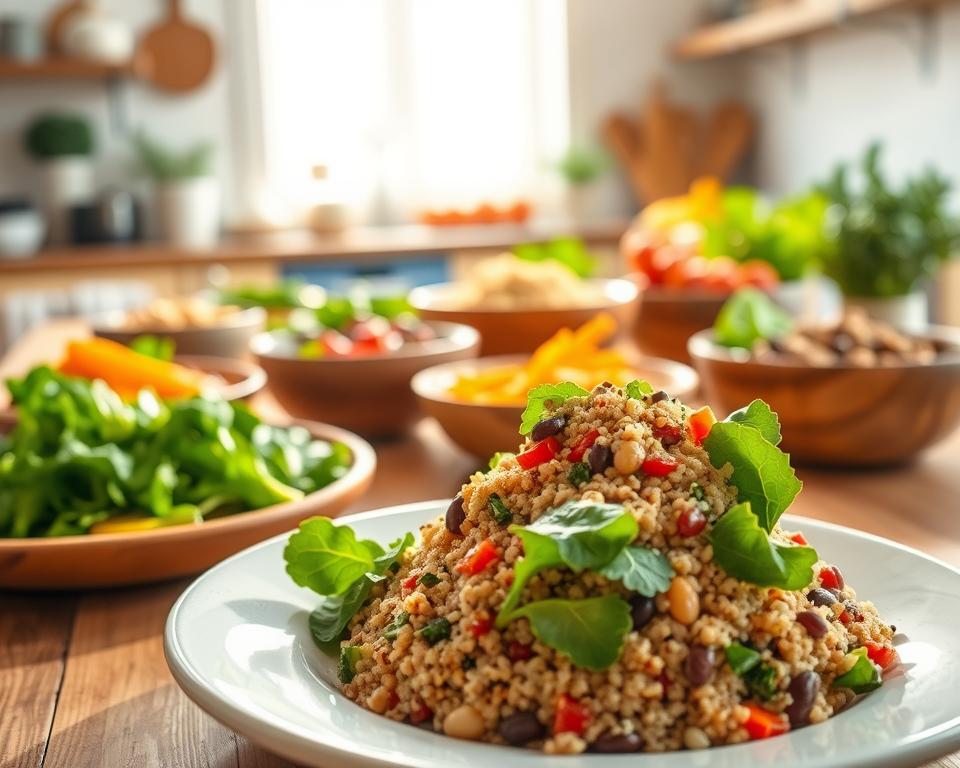
Swap white rice or pasta for brown rice, quinoa, farro, or whole wheat spaghetti to lift grains per meal.
Replace one or two meat entrees each week with beans, lentils, or chickpea bowls for a big boost in fiber intake and protein.
Smart snacking and hydration
Snack on crunchy vegetables, a handful of almonds, or fruits with the skin to keep energy even between meals.
Drink water with higher-fiber meals and snacks—hydration helps form soft, bulky stool and supports regular bowel movements.
- Spread grams across the day: breakfast, lunch, snacks, and dinner.
- Batch-cook beans and whole grains on Sunday to make meals quick.
- If you are sensitive, add grams gradually and note which foods feel best.
“Small, steady changes make it easy to hit ~30+ grams in a day without extra work.”
Zaključak
Eating a wide mix of fruits, vegetables, whole grains, legumes, nuts, and seeds is the simplest route to steady energy and lasting health. ,
Keep variety central: meeting daily dietary fiber goals (about 25–35 grams) lowers your risk of heart disease, type 2 diabetes, colorectal cancer, and constipation while helping cholesterol levels and blood sugar stay steadier.
Both soluble fiber and insoluble fiber matter: viscous types help glucose and cholesterol control, and nonfermentable types keep your digestive tract regular. Start small, spread grams across meals, and sip water as you increase intake.
Savjet: swap in oatmeal, add a bean salad, or choose whole-grain sides this week — one change today makes long-term risk reduction easier to reach.