إعلانات
Have you ever wondered why a roast, a spiced pie, or a sweet bread shows up at the same table every year?
You’ll travel through time as this piece traces dishes from Stonehenge gatherings and Tudor banquets to 1930s menus. You’ll see how people turned seasonal challenges into celebration and how simple ingredients became lasting staples.
The تاريخ here links Roman revelry, German baking, and New World blends to what your family serves today. Stories of gingerbread houses, candy canes, chestnuts, eggnog, panettone, and Bûche de Noël reveal cultural threads that stretch across continents.
You’ll pick up quick facts to share with loved ones and practical ideas to make your menu more meaningful. By the end, you’ll taste tradition with new eyes and feel ready to shape your own rituals for the season.
From Prehistoric Feasts to Your Winter Table
Picture a vast riverside camp where firelight lit spits and large pots while people marked the longest night. You can almost hear the clatter as meat roasted and stews bubbled on open flames.
إعلانات
Excavations at Durrington Walls revealed thousands of pig and cattle bones. Scientists used tooth wear to show most pigs were slaughtered about nine months old — born in spring and killed around midwinter.
Pork sizzled on spits and beef cooked in big pots. Foraged fruit like crab apples and hazelnuts added tart, nutty notes to hearty stews. This mix of meat, fruit, and simple cooking shaped many early seasonal meals.
- Place: a planned gathering tied to Stonehenge’s solstice alignment.
- People: communal cooking and shared plates that built bonds.
- Part of your year: practical provision and ceremonial feast rolled into one.
That ancient scene links history to how you set your own winter table today. What began as survival and ritual became a model for the holiday meals you know.
إعلانات
Ancient holiday food origins: From Stonehenge’s midwinter meat to Roman revelry
Across millennia, communities made the same choice when the agricultural year slowed: gather, eat, and mark the turning point together. You can trace a straight line from Neolithic banquet pots to the Roman practice of extending celebration into many days.
Midwinter at Durrington Walls
At Durrington Walls, people roasted pork on spits, simmered beef stews, and added foraged fruit to their pots. These meals matched the solstice alignment at nearby Stonehenge and tied the feast to a clear time in the year.
Saturnalia’s upside-down season
Fast forward to Rome: Saturnalia began on December 17 and could run up to seven days. Households hosted fine foods and flowing wine while normal roles paused.
Masters invited slaves or served them, and freeborn Romans dressed in bright clothes and the pileus. Games, performances, and gift-giving — from writing tablets to exotic animals — made the period playful and generous.
- You’ll see continuity: simple midwinter meats grew into richer menus over the century.
- The extended days of celebration created space for communal bonding and ritual pauses in work.
- History shows that great feasts were as much about people joining together as about what was served.
Medieval Merrymaking: Monastery calories, castle banquets, and the rise of pies
Monastic kitchens lifted their daily fare in the week before Christmas, trading plain rations for spiced dinners that felt like celebration.
A merry monastic Christmas: fish in wine, minced meat pies, and sugar-spiced days
You would walk into a refectory and find fish simmered in wine and herbs, a welcome change from plain meals.
Bakers filled pastry with minced meat or offal in thick gravy so pies became central to the feast. Monasteries added sugar and spices to mark the season and make each course feel special.
Pittances—gifts of food and drink—arrived from neighbors and boosted communal tables, linking clergy with local families.
Christmas in a castle: trencher bread, boar’s head, and jugs of ale and wine
In castle halls, trenchers of bread held stews and roasts, while a boar’s head reigned at the center of the table.
- Wealthy houses served roasted beef, pork, and venison, sometimes reaching staggering daily calories.
- Ale and imported wine poured from jugs kept cups full through long winter days.
- Eggs, sugar, spices, and rich pastry helped elevate simple staples into memorable courses.
You’ll see how both modest refectories and grand halls turned shared plates into ritual. That blend of spectacle and taste became part of the tradition you recognize today.
Terrific Tudor Traditions: Meat-heavy feasts, turkey’s debut, and wassailing bowls
Tudor tables brimmed with roasted beasts, gilt birds, and showy pies that announced status as loudly as trumpets. You’d find venison, beef, and sometimes swan or peacock laid out to impress guests and mark the season.
From venison to swan: what landed on a feast day table
Meat dominated every course. Wild boar, beef, and game signaled wealth and the turn of the year.
Eggs, dairy, and rich pastry rounded the spread, giving texture and richness to each plate.
Turkey walks to market and the showstopping boar’s head
Turkeys first arrived from the New World and were literally walked from Norfolk and Suffolk to London markets.
The boar’s head made the meal a spectacle: trumpets, song, and a carved centerpiece that turned dinner into performance.
The layered “Christmas Pie” and Twelfth Night cake with hidden luck
The famous Christmas Pie stacked pigeon, partridge, chicken, goose, and even turkey inside a pastry coffin. This layered recipe was a statement piece.
Twelfth Night cake was a fruit-rich brioche with a hidden coin or bean to crown a revels king or queen—playful tradition that invited music and games.
Wassail: hot ale or cider with sugar, spices, apples, and a toast to the trees
At dusk you’d pass around warm wassail bowls. Sweet, spiced ale or cider with apples and bread blessed the orchards for the coming year.
- You’ll see how recipes and pageantry turned simple meat and pastry into ritual.
- These Tudor traditions seeded many dishes you still enjoy at seasonal dinner and celebration.
- For more detail on period menus, explore Tudor dinners through history.
Georgian to Victorian Seasons: Roast goose to turkey, mince pies, and plum pudding
In Georgian dining rooms, service came in waves: heavy roasts were followed by sweet puddings laid out on the same long table. This was a time when spectacle mattered and taste was bold.
Georgian parties and rich first courses
Wealthy hosts piled platters with beef, mutton, venison, and goose while first courses might include turtle soup or shellfish. Frumenty — a grain porridge sweetened with almonds, currants, and sugar — often arrived beside roasts.
Meat و fish shared the stage with mince pies and plum pudding in multi-course displays that defined the season.
Victorian family dinners and shifting tastes
By the Victorian era, celebrations grew more domestic and centered on families. Roast goose gave way to turkey more often, and ham appeared at many tables.
Vegetables, bread, and simple sides rose in importance, making the big عشاء easier to manage for busy households on Christmas Day.
Mince pies and puddings: meat to fruit and spice
Over time, recipes dropped meat from mince pies and puddings. Dried fruit, warm spice, and extra sugar took over.
- Puddings were boiled in advance so you could focus on the roast.
- Sweets moved from afterthoughts to central comforts for the season.
- For further reading on period menus, see historic dinners through history.
Across Traditions in the U.S.: Hanukkah, Kwanzaa, and Christmas at the same table
Across many U.S. tables, winter evenings bring together distinct rituals and shared plates. You often see three celebrations overlapping in time, and families find gentle ways to honor each one at a single meal.
Hanukkah delights: latkes, loukoumades, and the glow of the menorah
Hanukkah lasts eight nights, and each evening lights a new candle on the menorah. Traditional treats—crispy latkes and syrupy loukoumades—celebrate oil’s miracle and give everyone a sweet, fried bite.
You’ll also find dreidel games and chocolate gelt at many tables, simple rituals that bring children and adults together during this season.
Kwanzaa’s Karamu: jerk chicken, jollof rice, okra, and dishes of the diaspora
Kwanzaa runs December 26 to January 1 and centers on community values. The Karamu feast often features jerk chicken, jollof rice, okra, and even Cajun catfish.
Symbols like the kinara, mishumaa saba, mkeka, and muhindi set the table’s tone while dishes connect families to African diaspora traditions.
Christmas dinner classics: turkey or ham with stuffing, gravy, cranberry sauce, and pies
Christmas meals in the U.S. favor turkey or ham with mashed potatoes, stuffing, and rich gravy. Cranberry sauce and pies complete the familiar spread.
أنت can blend menus—serve latkes alongside greens from a Karamu or add a small plate of fish for guests who prefer it. Small choices help everyone feel seen at one shared table.
- You’ll tour three celebrations that share the holiday season and their table traditions.
- You’ll see how people use recipes and ritual to pass values between generations.
- You’ll pick up ideas to plan an inclusive, heartfelt meal for your families and friends.
Sweet Stories You Love: Gingerbread houses, candy canes, chestnuts, and eggnog
Many of the season’s best-known treats grew from a local baker’s experiment or a street vendor’s clever twist. These sweets tied place and period to the table and to the stories you tell while you bake.
Gingerbread houses and German tales
German bakers turned the Brothers Grimm tale into edible architecture. Gingerbread became a decorative pastry and a playful communal project.
Candies bent in Cologne
A Cologne choirmaster reportedly shaped sugar sticks into shepherd’s crooks to keep kids quiet in church. The peppermint stick evolved into the familiar candy cane you know today.
Chestnuts, eggnog, and festive breads
Chestnuts roasted on open fires were cheap, filling, and nutritious—perfect for cold nights.
Eggnog began as warm milk-and-ale in medieval Britain and, by the American period, often included sugar and rum for a richer toast.
Panettone’s Milanese legend—“Pan de Toni”—gave the world a rich bread lifted with eggs and studded with candied fruit.
Bûche de Noël: from hearth to cake
Parisian pâtissiers reimagined the yule log as a rolled cake, a chocolate-swirled pastry that keeps the hearth’s story on your dessert plate.
- Try swapping fillings, frostings, or spices to make these treats your own.
- You’ll connect recipes to place and to a century of hands shaping sweets.
- Bake together and let these small cakes and breads tell new family stories.
The 1930s Modern Christmas: Turkey with bread sauce, cocktails, and brandy butter
The 1930s reimagined the seasonal table with a polished turkey as the clear centerpiece and a tidy flow from starter to dessert.
Without home refrigerators, people timed purchases so birds arrived close to the big day. A turkey could cost a week’s wages, so serving one showed real effort.
Starters to sweets: tomato soup, lobster au gratin, orange salad, and plum pudding
Menus followed a set order: a light starter like tomato soup or orange salad, a rich main with bread and a warm sauce, then a dramatic plum pudding.
Brandy butter became the finishing touch, while Royal recipes—packed with Empire-sourced fruit and strong ale—pushed pudding to fame.
Sidecars to eggnog: festive drinks that lit up Christmas Eve and Christmas Day
Cocktails such as the sidecar and Champagne punch brightened Christmas Eve. On Christmas Day, creamy eggnog kept the cheer rolling.
- You’ll set a 1930s table with turkey and classic bread sauce, mindful of time and cost.
- Choose a vintage starter, then finish with a plum pudding and brandy butter.
- Toast the evening with a sidecar or keep it cozy at noon with eggnog.
From Past to Your Holiday Season Today: How traditions evolve on your table
Tradition arrives at your table adjusted for today’s tastes and time constraints. You’ll keep the soul of roast, pie, and pudding while updating steps to fit your kitchen and schedule.
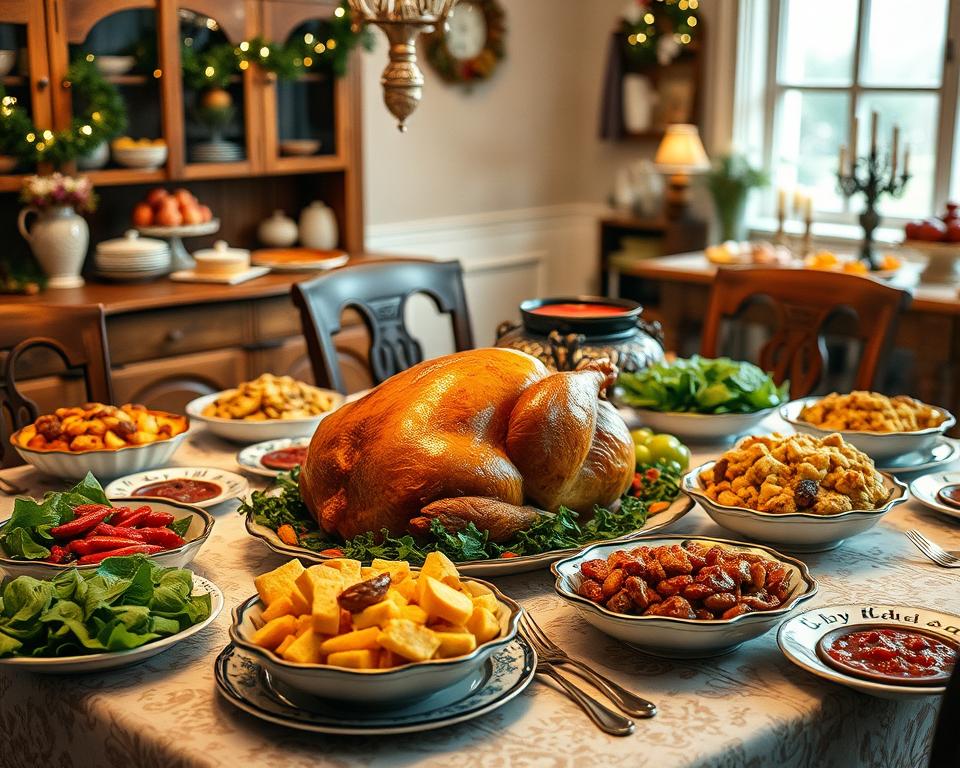
Old-world recipes, new-world tastes: adapting meat, bread, pastry, and sauce for your loved ones
You can plate turkey, ham, or chicken beside mashed greens and modern sides without losing warmth. Swap heavy pastry for lighter crusts or pare back spices to suit your family.
Make-ahead moves save time: prep pastry, brine the bird, or simmer sauces a day early. These small steps keep the day calm and let you enjoy the meal.
- Blend tradition and creativity by honoring staples while testing new flavors.
- Plan recipes that travel well to potlucks and across tables for families and friends.
- Consider dietary needs so everyone—people you love—feels included at dinner.
- Use heritage dishes as a base, then tweak herbs or sweetness to match today’s palates.
خاتمة
Small choices—an added spice, a borrowed cake—have steered long culinary lines into new ways to celebrate.
You’ve seen how meals moved from meat and fish at hearths to sugar-sweet treats and festive pies. Those changes show that tradition grows with the people who keep it.
Use one period’s recipe or mix several to build your own dinner. Share tasks so the day runs smoothly, and tell the stories behind each dish to make the season mean more.
In the end, the best way to honor the past is to make the table matter to your family. Cook, share, and enjoy the celebration your ones will remember.