Anúncios
Want bigger, more complex flavor without opening new jars? You can make your food sing by timing what you add and how you wake each ingredient. Start with whole aromatics early, bloom ground seasonings in fat mid-cook, then finish with a bright blend so each note stays clear.
Real cooks do this all the time. Pitmasters like Brian Leigh of B.T. Leigh’s recommend a coarse salt-and-pepper base, then phased sweet and heat to build bark and avoid muddled results. Toasting whole pieces for a minute brings oils forward; quick blooming in hot oil releases fat-soluble compounds fast.
In short: you’ll learn a simple order that saves time and avoids extra salt, butter, or sugar. The result is richer taste, more depth, and a better eating experience from vegetables to barbecue.
What “Layering Flavors” Really Means—and Why It Works Right Now
Think of flavor layering as a sequence of moments that your mouth experiences, not just a list of ingredients. It’s the intentional ordering of tastes, aromas, and textures so each component complements the others. The goal is a multi-dimensional dish where every bite shows something new.
From one-note to multi-dimensional: how layering engages your taste buds
First you set a foundation—salt, pepper, and aromatics—that gives a steady savory base. Mid-cook, add warming flavors to round the food taste. Finish with a bright or hot top note so the aroma hits your taste buds last and feels fresh.
Anúncios
Layering vs. mixing: keeping notes distinct instead of muddled
Mixing everything together often mutes high notes and makes a dish uniform. By adding elements at stages, you preserve clarity so individual notes stand out in each bite.
“Start savory, bring sweetness later, finish with heat,” advises pitmaster Brian Leigh.
The present-day cook’s shortcut to depth without adding ingredients
With busy schedules, sequencing is the fastest way to amplify flavor without buying more jars. Use a simple model—foundation, build, finish—to control when each taste lands and make your food feel layered and deliberate.
Anúncios
- Foundation: early savory base
- Build: mid-cook warming notes
- Finish: late bright or hot top notes
Build the Foundation: Salt, Pepper, Aromatics, and Oil
A solid start begins with simple seasoning: salt and pepper applied right away coax moisture and natural taste out of your ingredients. This early move sets the foundation so every later addition can shine without extra jars or fuss.
Start with a salt and pepper base to set the foundation and manage moisture
Lay a light salt pepper pass over the surface to help food sweat. Doing this early draws out juices and amplifies inherent sweetness while preventing dry spots.
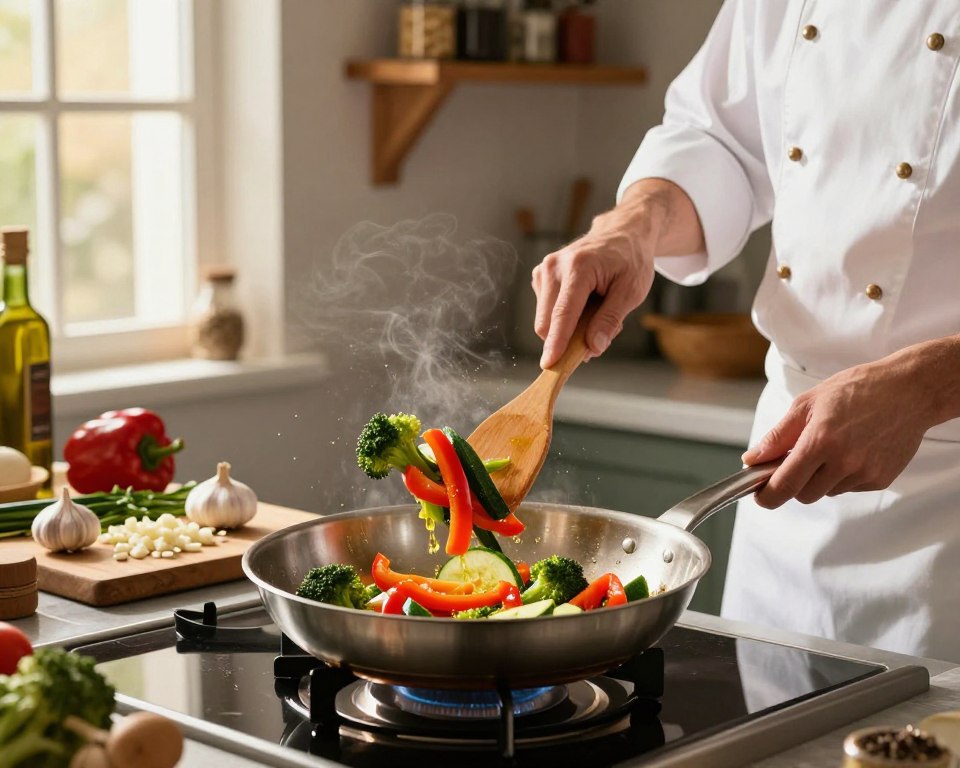
Sauté onions and garlic in oil to create your flavor base
Sweat your onions and garlic gently in oil until they are translucent and fragrant. That soft sweetness becomes the base that supports later spices and herbs.
Choose the right fat (oil, butter, ghee) to carry spice notes
Pick a fat that suits the dish. Use neutral oil for clean expression, butter for soft richness, or ghee for nutty, high-heat depth. Fat carries fat-soluble spices and unlocks aroma better than water.
- Start with salt and pepper: even seasoning helps layers adhere and taste balanced.
- Sweat aromatics: onions and garlic release sweetness that lifts everything else.
- Match your fat: choose oil, butter, or ghee based on heat and desired flavor.
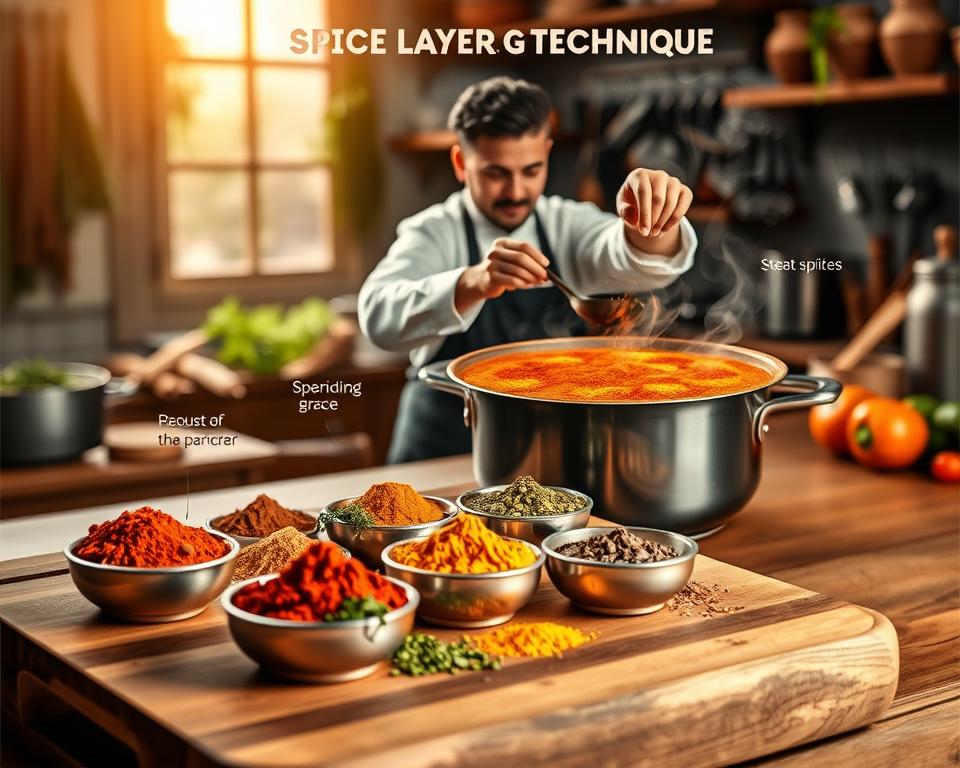
The Spice Layering Technique Step by Step
Sequence your additions so the final bite reveals multiple clear flavors. Start with whole pieces at the beginning to perfume the oil and the dish from the ground up. Toast whole pieces 1–2 minutes in a dry pan until fragrant, then grind if you want a finer texture.
Layer at different stages
After aromatics like onions and garlic turn translucent, add ground spices mid-cook. Bloom them in hot fat for 30 seconds to 2 minutes so their fat-soluble flavor spreads through the base.
Timing, heat, and salt strategy
Protect sweet spices and delicate herbs by adding them near the end. Use gentle heat to avoid bitter, harsh notes. Add a small pinch of salt early to manage moisture, then finish with a final seasoning to sharpen the whole dish.
“Toast briefly, bloom gently, and finish boldly.”
- Start whole at the start, ground mid-way, blends at the end.
- Watch time and heat so you open aromas without burning them.
- Taste as you go; each pass should add clarity, not clutter.
For practical reading, try cumin and coriander with sautéed onions mid-cook, then finish with a fragrant blend right before serving. For more on mastering this approach, see mastering the art of layering flavors.
Pro Techniques That Multiply Flavor Without Adding Ingredients
A short toast in a dry pan can turn raw seeds into warm, nutty aromatics. Do this for 1–2 minutes until they darken slightly, then cool and grind. That simple step deepens flavor and removes harsh, raw notes.
Toast whole spices to release oils and deepen aroma
Dry-toasting brings out oils and gives seeds a richer profile. Use light heat and smell for a toasty, not burnt, scent.
Bloom spices in hot oil for an aroma explosion
Add ground spices to a spoon of hot oil, butter, or ghee for 30 seconds to 2 minutes. When the oil sizzles and the kitchen fills with scent, those fat-soluble compounds are working through your base.
Whole vs. ground: when each shines
Use whole items early for steady depth in long cooks. Add ground powders mid-cook so they integrate. Save a finishing blend for the end to keep top notes lively over sauces and vegetables.
Pressure cookers and braises
High pressure speeds absorption, so add hardy whole pieces before sealing, stir in ground types mid-cycle, and finish after pressure drops for fresh aroma. For more on thinking like a chef, see mastering flavor thinking like a chef.
“Toast briefly, bloom gently, and finish boldly.”
Apply, Adapt, and Troubleshoot in Real Dishes
Apply the base-build-finish order to real dishes so the final bite unfolds in clear, welcome waves.
Meat and BBQ
Start with a coarse salt-and-pepper base so the surface seasons and sweats. Add primary spices before heat and let them set.
Finish with a touch of sweetness or heat near the end. This prevents scorch and builds a proper bark that crackles on each bite.
Adapt by cut: brisket wants a stronger savory base; ribs handle a slightly sweeter finish. Those combinations keep the crust and interior balanced.
Vegetables and Sauces
Sweat onions and a little garlic, then bloom your spices in fat and simmer to integrate. That order gives clean, complex tastes in every mouthful.
For stews or braises use pressure to speed infusion. Finish with a bright blend or a pinch of salt to lift the flavors and avoid a flat sauce.
Common Mistakes and Quick Fixes
Avoid dumping all seasonings at once—crowded additions make muddled results. If spices burn, pull the pan off the heat and add a splash of fat to recover.
If a dish tastes flat, space your next time additions, cut back on quantity, or add a fresh finishing blend to sharpen the edges.
“Start coarse, build slowly, and finish boldly.”
- Example: bloom cumin and coriander for chili depth.
- Example: add paprika after deglazing to prevent burning.
- Finish with za’atar or garam masala right before serving for an aromatic lift.
Conclusion
A simple sequence—start bold, build mid-cook, finish bright—gives every bite more interest.
Use whole elements early, add ground ones as the pan heats, and save a finishing blend so the final flavor pops. Salt early to manage moisture and protect delicate herbs and sweet notes from long heat.
Across types of dishes—from BBQ to vegetables—this repeatable way brings real depth without adding ingredients. Store your jars airtight in a cool, dark place so they stay lively for years and you get consistent results.
When in doubt, simplify: fewer, well-timed additions and a late sprinkle of pepper or a fresh herb will rescue a nearly done dish.