Anúncios
You’ll learn how a mix of art and science turns everyday food into a memorable meal. Aroma maps and shared compound data explain why some matches sing and others fall flat. Consumer research backs this up: 67% say flavor drives sweet baked goods buys, 72% for ice cream, and 70% for ready-to-drink tea.
In this guide, you’ll get clear steps to lift a weeknight plate into something polished. You’ll see what to combine, how to layer, and when to edit so each bite has purpose.
We’ll ground your instincts with research so you can brighten a rich sauce, soften bitterness, or boost aroma without overpowering taste. Expect practical templates, swap lists, and confident tips you can use right away.
By the end, you’ll have a repeatable method for smart combinations that fit your kitchen, season, and schedule—so your food feels both simple and elevated.
Why flavor pairing matters right now
Today’s diners expect more than good cooking; they want confident combinations that make each bite memorable.
Anúncios
Flavor influences purchases across categories—from baked goods to beverages—so thoughtful matches matter for home cooks and product makers alike. Data shows 67% of shoppers say flavor drives sweet baked-goods buys and 72% for ice cream. For drinks, 70% of ready-to-drink tea buyers and 56% of soda consumers rank flavor as the top factor.
You’ll learn practical steps to choose flavors with purpose and use trends wisely. That means keeping familiar favorites like chocolate and vanilla, then adding seasonal twists such as maple or peppermint to keep dishes fresh.
What you’ll learn and how to use it
- Simple rules to read a dish and add brightness, balance, or sweetness.
- How to scale weeknight wins into dinner-party experiences with matched beverages and cheese or wine options.
- When to stick to comfort and when to layer a modern twist to keep your menus current.
Bottom line: apply a few small, science-backed moves and you’ll turn ordinary food into memorable experiences without extra gear or fuss.
Anúncios
The science of flavor: compounds, maps, and why some pairings just work
Knowing which molecules ingredients share takes the guesswork out of building confident combinations.
Flavor-pairing theory suggests that foods with overlapping aroma compounds are more likely to sing together. The more compounds two ingredients share, the higher the odds they will create a pleasing note on the plate.
Read a flavor map like a guidebook. Nodes that cluster mean compatible profiles. That helps you find new matches among fruity, nutty, or spicy families without blind guessing.
But shared compounds don’t guarantee success. Intensity, temperature, and texture can cause two compatible foods to misfire. Small adjustments—reduce intensity, change cook method, or add acid—fix many problems.
Quick checklist to test a new idea:
- Check aroma alignment: do key compounds overlap?
- Balance tastes: sweet, acid, salt, and bitter in the dish.
- Plan preparation: roast, sear, or chill to shape final notes.
- Consider a drink: wine or a neutral beverage can lift, not mask.
Use the map as a tool, not a rulebook. It accelerates learning and mixes art and science so your experiments stay both curious and reliable.
Culinary flavor pairing: principles and patterns
A clear set of principles will show you when to lift, soften, or anchor a dish.
The taste matrix—acid, fat, bitter, salt, spicy, sweet—gives you a fast diagnostic tool. Read it to decide if a dish needs a bright acid lift, a splash of salt for clarity, a touch of sweetness for balance, or extra fat to round sharp edges.
The taste matrix: acid, fat, bitter, salt, spicy, sweet
Salt can tame complexity. Heat often raises perceived bitterness and acidity. Sweetness balances other notes without masking them. Use these ideas as simple rules to guide edits while you cook.
Contrasting vs. congruent pairings for balance
Contrasting flavors create excitement—think spicy heat softened by a sweet note. Congruent pairings match density and aroma for a seamless profile. Choose contrast when you want punch; choose congruence for comfort.
Textures and temperatures that amplify flavors
Match crunch with creaminess or silk with snap to make each bite more interesting. Cold elements sharpen acidity; warm sauces unlock aroma. Use texture and temp as tools to steer how profiles land on the palate.
- Start with a base, add a counterweight, then layer supporting notes.
- Salt earlier for integration; add acid late for brightness.
- Test intensity in the pan so delicate components stay distinct.
Core building blocks: flavors, aromas, and pantry power-ups
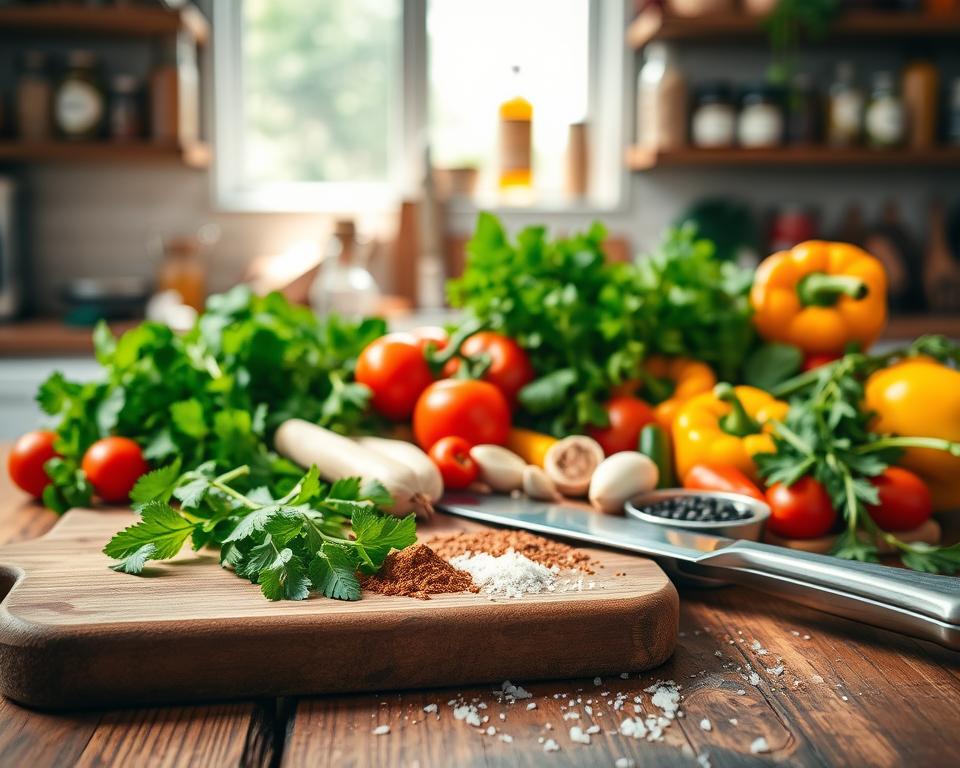
Anchor each plate with simple scaffolding—umami for depth, sweetness for balance, and acidity for lift.
Umami, sweetness, and acidity as your scaffolding
The five primary tastes interact to shape harmony: sour brightens and cuts richness, salt raises sweetness, and umami deepens savory impact.
Start by tasting your dish. If it feels flat, add an umami ingredient like soy or mushrooms. If it’s heavy, brighten with citrus or vinegar. If it lacks lift, a touch of sweetness can smooth edges.
Herbs and spices that bridge profiles
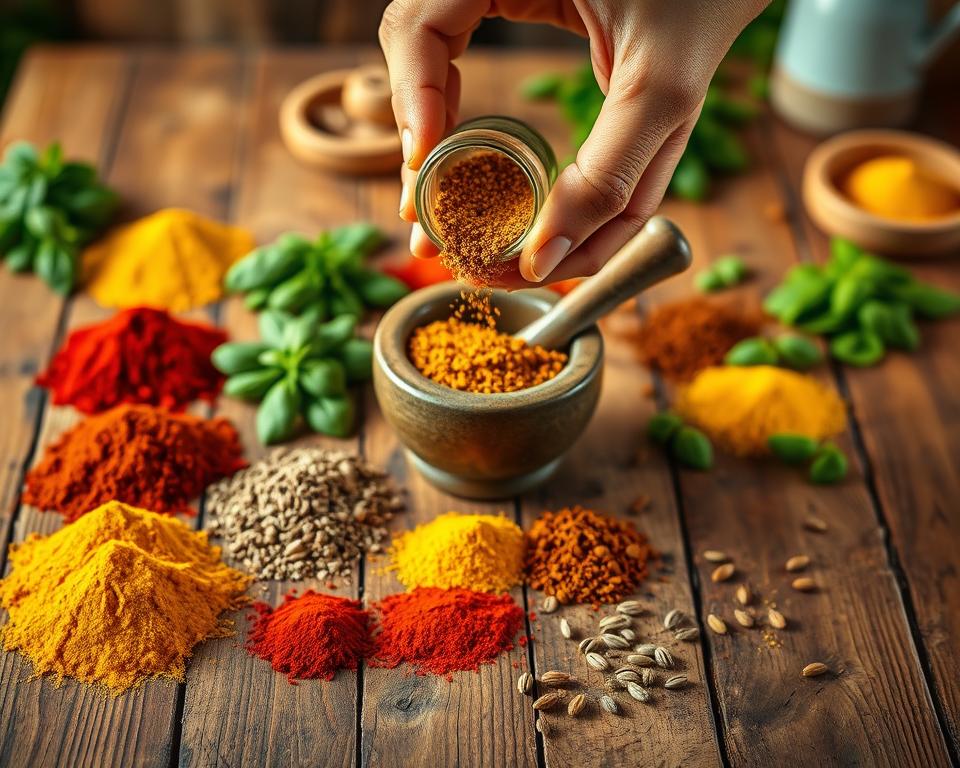
Reach for rosemary, basil, oregano, and thyme to connect disparate notes.
- Rosemary — resinous, pairs well with lamb and lemon.
- Basil — fresh and peppery with tomatoes and strawberries.
- Oregano — earthy backbone for grilled meats and tomatoes.
- Thyme — woodsy support for poultry, mushrooms, and roasted veg.
Balancing richness and freshness in ingredients
Tempering rich foods with acid, crisp textures, and raw herbs keeps the plate lively.
“Taste, diagnose, add one targeted building block, and retaste until the plate clicks.”
- Lift: citrus zest, vinegars.
- Depth: soy sauce, dried mushrooms, miso.
- Rounding: a pinch of sugar or honey for controlled sweetness.
Quick power-ups: toasted nuts, infused oils, umami sprinkles, and fresh herbs you can reach for when you need a fast boost.
You’ll leave this section with a repeatable process: taste, pick one ingredient, adjust, and taste again until the combination feels right.
Playbook: food-to-food flavor combinations that deliver
Here’s a compact playbook of tested food-to-food combinations you can use right away.
Use the lists below as quick prompts for sauces, salsas, baked goods, ice cream, and cocktails. Each combination note includes when to use it and a simple tweak to make it sing.
Fruit + spice
- Mango + jalapeño: bright, clean heat for salsa, glazes, or cornbread. Add lime to sharpen.
- Jalapeño + pineapple: tropical lift with controlled spice—great on tacos or grilled shrimp.
- Ginger + lemon: spicy-citrus snap that suits marinades, teas, and light cakes.
- Orange + chipotle: smoky depth and citrus sparkle for roasted veg and marinades; balance with a touch of honey.
Fruit + nut
- Peanut butter + grape or strawberry: nostalgic richness for cookies, milkshakes, or savory noodle sauces.
- Wild cherry + pistachio: tart meets earthy—try in granola, muffins, or jam. Toast nuts to lift aroma.
Floral tones
- Coffee + lavender: floral depth for creamy desserts and ice cream. Use sparingly to avoid overwhelm.
- Honey + lavender: soft, aromatic notes that pair well with custards and shortcakes.
Modern classics
- Blueberry lemonade: summer sparkle for drinks and frozen desserts; tweak sweetness to suit your crowd.
- Chocolate orange: high-contrast harmony for cakes, truffles, and custards—cocoa bitterness meets citrus oil.
- Maple pecan: year-round comfort in muffins, ice cream, and breakfast recipes.
How to use this playbook: pick one combination, choose a format (salsa, glaze, cake), then taste and adjust acid, salt, or sweetness. These combinations are practical; they help you test new combinations and let your taste buds guide final seasoning.
Playbook: wine, cheese, and beverage pairings for memorable taste experiences
A good pour should support the plate, not compete with it. Match intensity first: light dishes need bright, crisp liquids; rich plates want structure and weight.
White wines—dry Sauvignon Blanc or Pinot Grigio suit seafood, green vegetables, and light dishes. Full-bodied Chardonnay works with creamy sauces and lobster. Sweeter whites like Riesling or Gewürztraminer handle spicy or salty dishes with grace.
Red choices by intensity
Light reds such as Pinot Noir or Beaujolais pair well with roasted chicken and salmon. Medium reds like Merlot or Sangiovese fit steaks and lamb. Bold reds—Cabernet Sauvignon or Syrah—match robust meats and aged hard cheeses for satisfying contrast.
Cheese intensity matching
Match cheese to the glass and the plate.
- Soft, bloomy Brie — bright whites or Champagne for lift.
- Semi-firm (Gouda, Manchego) — versatile reds for balanced notes.
- Firm aged (Parmesan, Cheddar) — mid-weight red like Merlot.
- Blue — sweet fortified wine (Port) to harmonize salt and richness.
Non-alcoholic and cocktail contrasts that shine
For beverage options, use high acidity to cut creamy dishes and gentle sweetness to tame heat. Citrus-based mocktails, sparkling water with a grapefruit twist, or coffee-forward cocktails work well with chocolate desserts without overpowering them.
Quick troubleshooting: raise acidity if a dish feels heavy, soften tannins with juicy meats, and add a touch of sweetness to calm heat. These simple rules help you build boards, menus, and flights that feel intentional and memorable.
From theory to plate: templates, swaps, and recipe ideas
Start with a simple structure and you’ll find creativity flows without guesswork. Use plug-and-play templates to build balanced dishes fast. Each template names the role of an ingredient so you can swap without losing harmony.
Simple templates for salads, mains, and desserts
Salad = leafy base + acid + fat + aromatic + crunch. Mains = protein + sauce (acid/fat balance) + herb. Dessert = creamy base + contrast + aromatic finish.
Smart swaps to create new combinations
Swap grids let you pivot by season or pantry: lemon ↔ vinegar, basil ↔ mint, maple ↔ honey, pistachio ↔ almond. Match intensity and pick one focal flavor so supporting ingredients add depth, not clutter.
- Taste checkpoints: after seasoning, after dressing, before plating.
- Texture moves: add crunch to creamy, cold to warm, or juicy to dense for lift.
- Wine and zero-proof notes: mirror acidity and weight—white for lighter dishes, red for roasted proteins, sparkling or citrusy zero-proof options for brightness.
Try two quick outlines: orange-chipotle roasted carrots with herbed yogurt; blueberry lemonade granita. Use the swaps above to customize and scale these recipes for weeknights or guests.
- Identify the gap in a dish.
- Choose one targeted ingredient to fix it.
- Retaste and lock the balance.
For more structured meal planning and simple templates, see simple meal templates.
Conclusion
Bring what you’ve learned to the table, and let small, smart edits turn ordinary dishes into standouts.
Use the science of shared compounds to spark ideas, then rely on your palate to judge intensity, temperature, and texture. Try proven matches like mango + jalapeño, chocolate + orange, or maple + pecan to gain confidence.
Keep it practical: start with a template, taste, and make one targeted change—acid, salt, or a crunchy element—until the dish lands where you want it.
Invite a thoughtful glass of wine or a bright zero-proof beverage to frame your food and round edges. Trust the art and the science, keep experimenting, and enjoy the tasty experiences you create.